



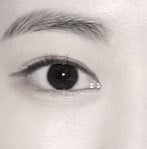









EYELID PTOSIS CORRECTION

CORRECT WEAKENED MUSCLES THAT RESULT IN DROOPING EYELIDS

EYELID PTOSIS CORRECTION

CORRECT WEAKENED MUSCLES THAT RESULT IN DROOPING EYELIDS

Ptosis Correction Incisional — INCISIONALPTOSIS CORRECTION

INCISIONAL

PTOSIS CORRECTION

  • Ptosis Correction Incisional — OPERATION TIME — About 40 mins.~1 hr.

    OPERATION TIME

    About 40 mins.~1 hr.

  • Ptosis Correction Incisional — Anesthesia — Local anesthesia and Sedation

    Anesthesia

    Local anesthesia and Sedation

  • Ptosis Correction Incisional — Stitch Removal — After about 5~7 days

    Stitch Removal

    After about 5~7 days

  • Ptosis Correction Incisional — Hospitalization — Discharged on the day

    Hospitalization

    Discharged on the day

  • Ptosis Correction Incisional — Follow-ups — 1 visit for stitch removal

    Follow-ups

    1 visit for stitch removal

  • Ptosis Correction Incisional — Recovery — May resume daily activities in 5~7 days

    Recovery

    May resume daily activities in 5~7 days

BANOBAGI PLASTIC SURGERY

SUITABLE FOR THOSE

  • Case.01

    1/3 of my pupils
    are covered
    by
    my eyelids

  • Case.02

    I tend to look
    sleepy and tired
    all the time

  • Case.03

    I have uneven
    eyes and/or facial
    asymmetry

  • Case.04

    I have thick
    and droopy

    eyelid skin

  • Case.05

    I want my eyes
    to look clearer
    and awake

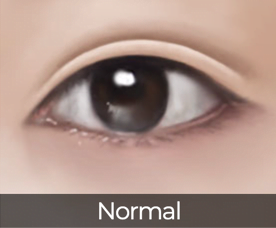
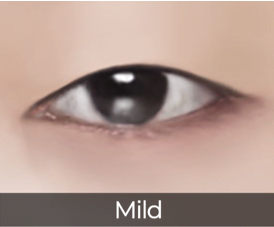
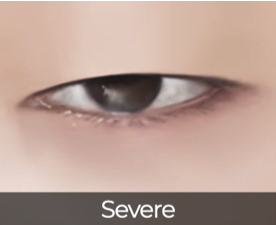
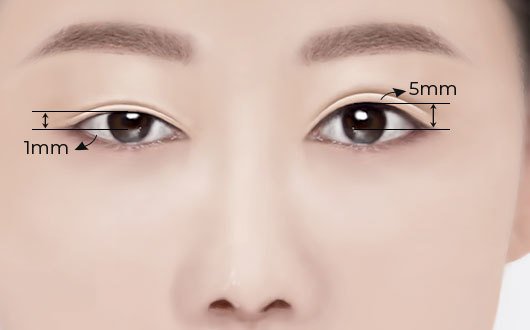
GRADING IN EYE PTOSIS

Ptosis correction must be customized for each individual as the level of ptosis differs for each person

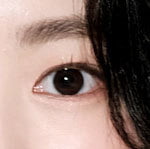
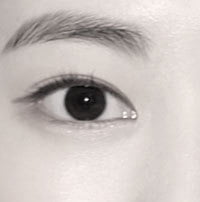
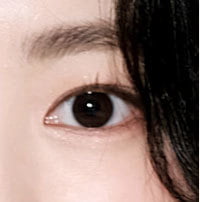
  • Ptosis grading — Normal eyelid position
  • Ptosis grading — Mild ptosis
  • Ptosis grading — Moderate ptosis
  • Ptosis grading — Severe ptosis

SURGERY METHOD

  • Ptosis Correction Incisional — Before Surgery
    01

    Before Surgery

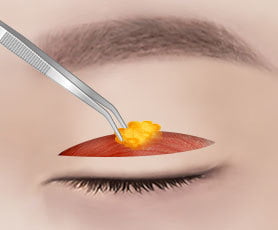
  • Ptosis Correction Incisional — Incision and removal of excessive fat and muscles
    02

    Incision and removal of excessive fat and muscles

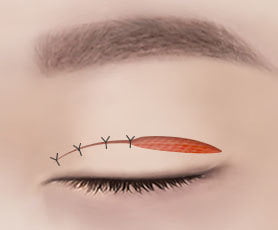
  • Ptosis Correction Incisional — Levator muscles tied and sutured according to the severeness of ptosis
    03

    Levator muscles tied and sutured according to the severeness of ptosis

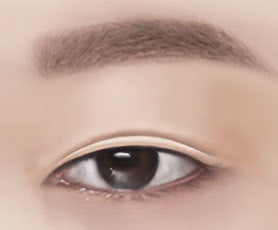
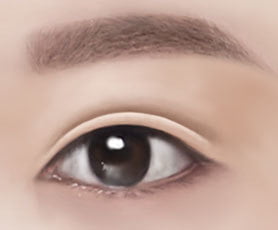
  • Ptosis Correction Incisional — Resulting in much brighter and defined eyes
    04

    Resulting in much brighter and defined eyes

ONLY AT BANOBAGI

Ptosis Correction Incisional — ONLY AT BANOBAGI
  • No more sleepy and tired-looking eyes through ptosis
    correction
  • Low possibility of loosening and wider range of ptosis
    correction by using the incisional method
  • No more wrinkles on the forehead from opening the
    eyes using forehead muscles
  • Natural looking correction fit for each individual.
    No overcorrection

BANOBAGI’s Key Values

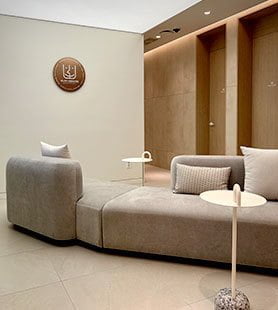
Ptosis Correction Incisional — Relaxing and comfortable facility
Relaxing and
comfortable facility
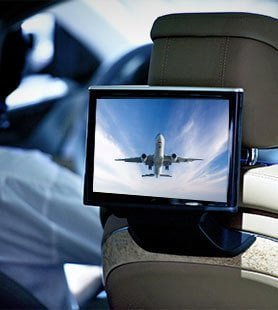
Ptosis Correction Incisional — System established to improve accessibility and convenience for foreign customers through 1:1 coordinator assignments, accommodations, and transportation
System established to
improve accessibility and
convenience for foreign
customers through
1:1 coordinator assignments,
accommodations,
and transportation
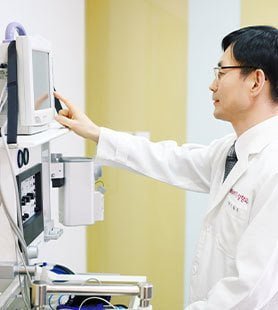
Ptosis Correction Incisional — Team of full-time anesthesiologists
Team of full-time
anesthesiologists
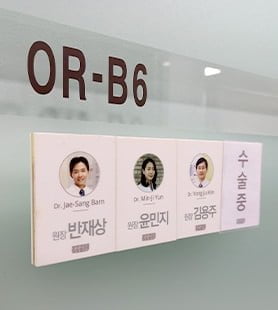
Ptosis Correction Incisional — Surgical transparency using the surgeon’s real-name system
Surgical transparency
using the surgeon’s
real-name system
Ptosis Correction Incisional — Board certified plastic surgery specialist with extensive clinical experiences and know-how as an expert
Board certified
plastic surgery specialist
with extensive clinical
experiences and
know-how as an expert
Ptosis Correction Incisional — Customized diagnosis and expertise built through years of research and efforts for individual foreign customers
Customized diagnosis
and expertise built
through years of research
and efforts for individual
foreign customers

BEFORE & AFTER

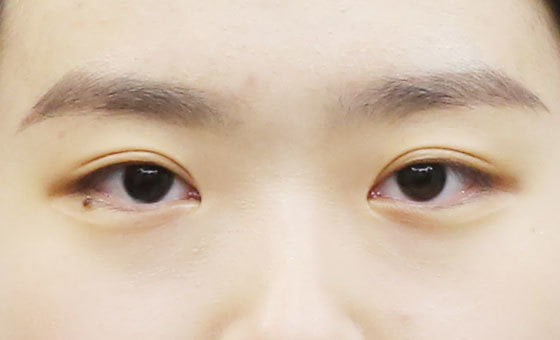
Ptosis Correction Incisional — Before treatment Ptosis Correction Incisional — After treatment
BEFORE AFTER
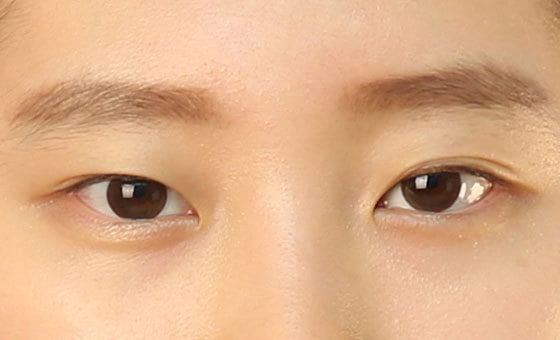
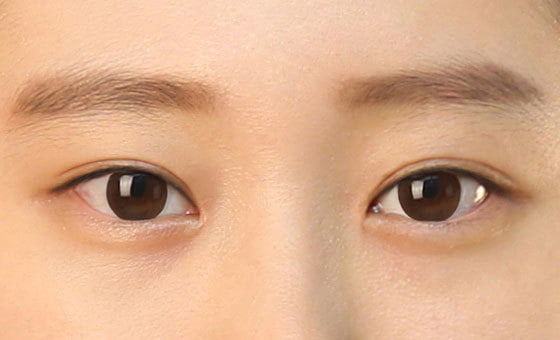
Ptosis Correction Incisional — Before treatment Ptosis Correction Incisional — After treatment
BEFORE AFTER

Frequently Asked
Questions

True ptosis means the upper eyelid itself sits too low over the pupil. Excess skin can cover the crease and lashes even when the eyelid edge is normal, while a low brow can push skin downward from above. During examination, the surgeon supports the brow, measures the eyelid position, and checks the strength of the eyelid-lifting muscle. This shows whether treatment should address skin, the brow, the lifting muscle, or a combination.

The main structure adjusted is the muscle that lifts the upper eyelid and the tendon that connects it to the lid. Through an incision in the eyelid crease, the surgeon shortens or advances this tendon so the eyelid sits higher. The amount of adjustment depends on how far the lid droops and how strong the muscle is. Selected mild cases may involve an additional small muscle, but the goal remains controlled, comfortable eyelid opening.

The surgeon measures how much of the pupil is covered, how strongly the eyelid moves, and whether the forehead is working hard to help open the eye. During surgery, eyelid height and shape may be checked while the patient looks straight ahead. The target is enough lift to make the eyes clearer and more balanced without creating a startled look or preventing full closure. Small differences between the two sides are adjusted carefully.

Often, yes. The same crease incision used to reach the eyelid-lifting muscle can also create or refine a double-eyelid fold. If a natural crease already exists, the surgeon may preserve its height and shape. If it is weak, uneven, or poorly placed, it may be adjusted. Because lifting the eyelid changes how much skin shows above the lashes, the crease must be planned together with the new eyelid height.

The two eyelids are planned separately because they may differ in muscle strength, skin thickness, brow height, and starting position. The lower or weaker side may need more adjustment, while the stronger side may need less. Correcting one eye can also reveal hidden drooping in the other, so both sides are checked together during surgery. The aim is meaningful improvement in balance, although perfect symmetry cannot be guaranteed.

A small gap during sleep or gentle closure can occur early because the eyelid has been lifted and is still swollen. This usually improves over days to a few weeks. Lubricating drops during the day and ointment at night may protect the eye while closure recovers. A persistent gap, increasing pain, marked redness, strong light sensitivity, or worsening blurred vision needs prompt review because the eye surface may be drying out.

Dryness, grittiness, watering, light sensitivity, and mild blurred vision can occur for several days or weeks while blinking adjusts. Symptoms are more likely in people who already have dry eye or use contact lenses frequently. Blur that clears after blinking or using drops is often related to dryness. Sudden vision loss, severe or increasing pain, heavy swelling on one side, or a cloudy spot on the eye surface requires urgent medical assessment.

Early swelling can make one eyelid look too high, peaked, or uneven. Small differences often improve as swelling decreases and the stitches soften over several weeks. A stable pointed shape, clearly excessive height, or lasting asymmetry after healing may mean the muscle was adjusted unevenly or the crease is pulling in the wrong place. Difficulty closing the eye should be reviewed early, while appearance-only concerns are usually assessed after several months.

The eyelids usually look highest and most uneven during the first one to two weeks. Much of the visible swelling improves over two to four weeks, but eyelid height and crease shape may continue changing for two to three months. Final assessment is often made after six months, once swelling and scar tightness have settled. Earlier review is needed if the eye cannot close, pain worsens, or vision changes.

Some difference between looking straight ahead and looking down is normal. After correction, the eyelid may briefly move more slowly when looking down because the adjusted muscle is still tight. This usually softens with healing. The eyelid can also look slightly lower late in the day because the muscle becomes tired. Surgery improves the resting position, but it does not make the eyelid completely unaffected by fatigue, sleep, or future aging.

The eyelid can gradually droop again if the muscle weakens further, the stitches stretch, or the tissues loosen with age. A small early drop often simply reflects swelling settling from an initially high position. True recurrence means the eyelid becomes lower again after first reaching a stable result. Open correction is generally more durable than a stitch-only method for moderate or severe ptosis, but no operation can permanently stop aging.

Revision is usually considered after the eyelid height and scar have stabilized, after six months. The surgeon first determines whether the lid was not lifted enough, lifted too much, shaped unevenly, or affected by the opposite eyelid. A small adjustment to the lifting muscle or crease may be sufficient. Earlier treatment may be necessary if excessive height is causing incomplete closure, severe dryness, or damage to the eye surface.

BANOBAGI PLASTIC SURGERY

BETTER TOGETHER

CONTACT US

517 Nonhyeon-Ro, Gangnam-Gu, Seoul Korea

X

emailicon E-MAIL

english@banobagi.com

Please feel free to contact us,
and we will reply you as soon as possible.
go-top