


















UNDER-EYE AREA

SMOOTH AND REJUVENATED UNDER-EYE AREA

UNDER-EYE AREA

SMOOTH AND REJUVENATED UNDER-EYE AREA

Lower Eyelids — TRANSCONJUNCTIVAL FAT REMOVAL/REPOSITIONING

TRANSCONJUNCTIVAL FAT

REMOVAL/REPOSITIONING

  • Lower Eyelids — OPERATION TIME — About 30 mins.

    OPERATION TIME

    About 30 mins.

  • Lower Eyelids — Anesthesia — Local anesthesia and Sedation

    Anesthesia

    Local anesthesia and Sedation

  • Lower Eyelids — Stitch Removal — None

    Stitch Removal

    None

  • Lower Eyelids — Hospitalization — Discharged on the day

    Hospitalization

    Discharged on the day

  • Lower Eyelids — Follow-ups — 1 visit if necessary

    Follow-ups

    1 visit if necessary

  • Lower Eyelids — Recovery — May resume daily activities in 3 days

    Recovery

    May resume daily activities in 3 days

BANOBAGI PLASTIC SURGERY

SUITABLE FOR THOSE

  • Case.01

    I have puffy
    under-eye
    with
    fatty tissue build up

  • Case.02

    I have dark circles
    that make me
    look tired

  • Case.03

    I have sunken
    under-eye

    that appears dark

  • Case.04

    I have under-eye fat
    that looks uneven

    when I smile

  • Case.05

    I have sagging
    under-eye

SURGERY METHOD

ㆍTRANSCONJUNCTIVAL FAT REMOVAL

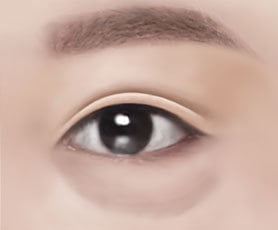
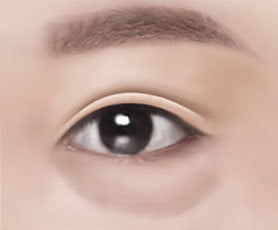
  • Lower Eyelids — Before surgery
    01

    Before surgery

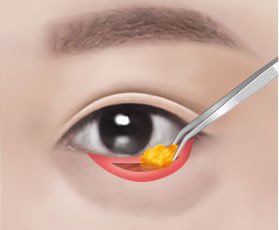
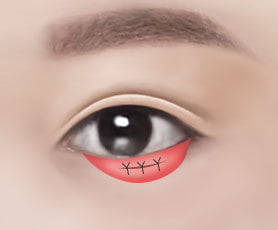
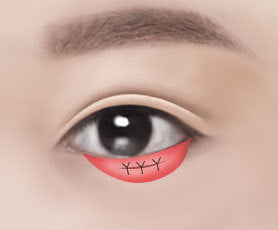
  • Lower Eyelids — Transconjunctival incision and Fat removal
    02

    Transconjunctival incision and Fat removal

  • Lower Eyelids — Suture
    03

    Suture

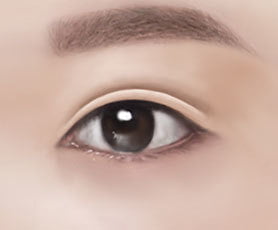
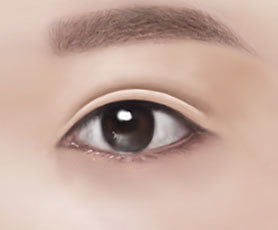
  • Lower Eyelids — After surgery
    04

    After surgery

Lower Eyelids — Add Info

ㆍTRANSCONJUNCTIVAL FAT REPOSITIONING

  • Lower Eyelids — Before surgery
    01

    Before surgery

  • Lower Eyelids — Transconjunctival incision
    02

    Transconjunctival incision

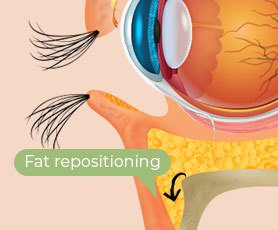
  • Lower Eyelids — Fat repositioning
    03

    Fat repositioning

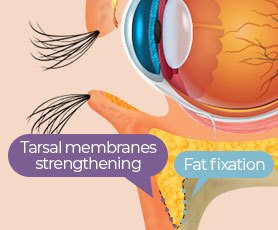
  • Lower Eyelids — Tarsal membranes strengthening and Fat fixation
    04

    Tarsal membranes strengthening and Fat fixation

  • Lower Eyelids — Suture
    06

    Suture

  • Lower Eyelids — Resulting in brighter under-eye area
    07

    Resulting in brighter under-eye area

ONLY AT BANOBAGI

Lower Eyelids — ONLY AT BANOBAGI
  • Helps get rid of the aged, tired look caused by dark
    under-eyes
  • No need to worry about recurrence through tarsal
    membranes strengthening!
  • Smooth, rejuvenated under-eye and dark circle
    improvement
  • Minimum incision techniques lessen the chance of
    swelling and leaving scars

BANOBAGI’s Key Values

Lower Eyelids — Relaxing and comfortable facility
Relaxing and
comfortable facility
Lower Eyelids — System established to improve accessibility and convenience for foreign customers through 1:1 coordinator assignments, accommodations, and transportation
System established to
improve accessibility and
convenience for foreign
customers through
1:1 coordinator assignments,
accommodations,
and transportation
Lower Eyelids — Team of full-time anesthesiologists
Team of full-time
anesthesiologists
Lower Eyelids — Surgical transparency using the surgeon’s real-name system
Surgical transparency
using the surgeon’s
real-name system
Lower Eyelids — Board certified plastic surgery specialist with extensive clinical experiences and know-how as an expert
Board certified
plastic surgery specialist
with extensive clinical
experiences and
know-how as an expert
Lower Eyelids — Customized diagnosis and expertise built through years of research and efforts for individual foreign customers
Customized diagnosis
and expertise built
through years of research
and efforts for individual
foreign customers

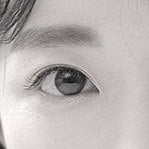
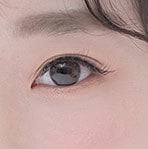
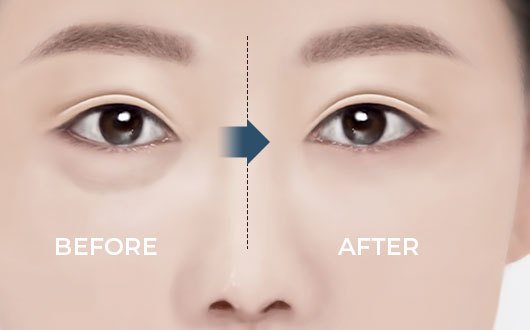
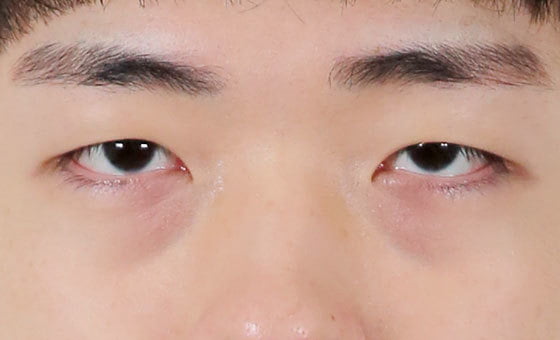
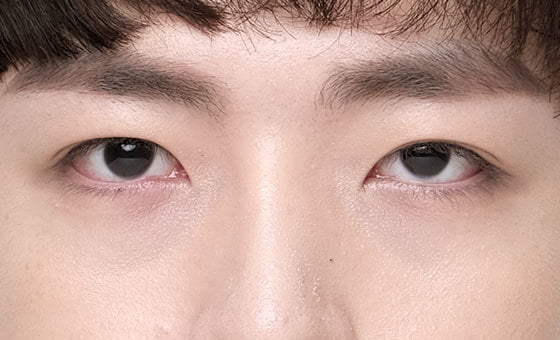
BEFORE & AFTER

Lower Eyelids — Before treatment Lower Eyelids — After treatment
BEFORE AFTER
Lower Eyelids — Before treatment Lower Eyelids — After treatment
BEFORE AFTER

Frequently Asked
Questions

Under-eye concerns often have several causes. Eye bags come from fat pushing forward, a tear trough is the hollow between the lower eyelid and cheek, and loose skin creates fine folds. Dark circles may come from natural skin color, visible blood vessels, thin skin, or shadows caused by bags and hollows. Examination separates these causes because surgery can improve shape and shadow but cannot remove every type of darkness.

Match the tool to the junction you actually have. Bag and trough together often favor fat repositioning, herniated pad volume is shifted into the groove so the patient’s own tissue softens the step without discarding volume that still has a job to do at the lid–cheek transition. True surplus without a hollow may need only selective pad reduction. When crepey excess or a skin–muscle component is part of the problem, an external lower blepharoplasty discussion enters the plan, with its lash-line incision and different lid-margin trade-offs.

Only if there is a usable pad to move. Pure hollow without a bag often has too little natural fat around the eye to fill the trough by reposition alone. Volume is judged at rest and in upgaze, any bulge above the groove, how deep the lid–cheek step is, and whether the inner, central, and outer pads have bulk worth transferring.

An inside-the-eyelid approach is usually chosen when the main problem is fat and there is little loose skin. It leaves no visible skin scar. An incision just below the lashes allows the surgeon to treat fat and remove a small amount of excess skin, but it creates a fine external scar and requires careful protection of eyelid position. The choice depends on skin looseness, eye bags, hollowness, and lower-eyelid support.

The surgeon treats the different fat pockets separately and removes only true excess. When a hollow tear trough is present, preserving or moving fat into the hollow often creates a smoother result than simply removing it. Taking too much fat can leave a hollow, bony appearance that is difficult to correct. A small amount of remaining fullness is generally safer and easier to refine than an under-eye area that has been over-emptied.

Surgery can improve dark circles caused by shadows from eye bags or a deep tear trough because smoothing the contour allows light to fall more evenly. It will not remove darkness caused by natural skin color, visible blood vessels, or very thin skin. Those concerns may require skin care, laser or light treatment, or camouflage makeup. In short, surgery changes the under-eye shape, but it does not lighten the skin itself.

Bruising usually peaks in the first few days and fades over roughly one to two weeks, longer if the skin bruises easily. Swelling is heaviest early; many people look comfortable being seen in public within that first fortnight, though subtle puffiness lingers. After fat repositioning, temporary bags or uneven fullness can last several weeks while transferred fat settles and lymphatic drainage catches up. Side-to-side difference is common at this stage. Contour reads more honestly somewhere around four to eight weeks, with finer settling into the second and third month.

Temporarily, yes, swelling can make the eyes look smaller, rounder, or briefly “different” without locking in a new permanent shape. Lower-lid fluid pushes soft tissue forward, may reduce visible white slightly, and can blunt the lid–cheek transition that looked sharp before surgery. Asymmetry between sides is routine in the first weeks. Social appearance often improves over one to three weeks as bruising and swelling recede; finer settling continues for one to three months. Permanent shape change from lower-lid work is more about lid-margin position (retraction, outward turning of the lower eyelid) or removing too much tissue than ordinary early swelling.

Lower-eyelid retraction means the lid sits lower than intended, scleral show means extra white is visible below the iris, and ectropion means the eyelid edge turns outward. These changes can cause dryness, watering, irritation, or incomplete closure. Mild early tightness may improve with swelling, but increasing white show, outward turning, worsening discomfort, or an eye that cannot close properly should be assessed promptly.

Contact lenses usually wait until swelling and irritation have eased, often around one to two weeks. Makeup can often restart after the wound is closed and any external stitches are removed, commonly within seven to fourteen days. Flying may be allowed once early swelling is stable and there are no complications, but timing varies with the procedure and flight length. Patients should follow their surgeon’s specific clearance and keep the eyes lubricated during travel.

The fat is secured into a new plane, yet week-two contour is still a draft. Early swelling can raise temporary ridges, firm spots, or small lumps along the trough path that soften as fluid leaves. Mild volume change during settling happens; large migration of well-fixed fat is uncommon, though uneven absorption or remaining pad bulk can leave a subtle step in some cases. A ridge might be swelling, a internal support stitches edge that flattens with time, or true irregularity after the area matures.

Severe pain, rapidly increasing swelling, vision change, infection, or a lower eyelid moving out of position may require early treatment. Appearance concerns such as remaining bags, hollowness, or unevenness are usually assessed after swelling has settled, often around three months or later. Depending on the cause, treatment may involve refining remaining fat, adding volume with filler or fat grafting, treating the skin, or surgically supporting the eyelid.

BANOBAGI PLASTIC SURGERY

BETTER TOGETHER

CONTACT US

517 Nonhyeon-Ro, Gangnam-Gu, Seoul Korea

X

emailicon E-MAIL

english@banobagi.com

Please feel free to contact us,
and we will reply you as soon as possible.
go-top