





















Cheekbone Reduction — Face Cheeckbone Reduction
Cheekbone Reduction visual
Cheekbone Reduction — Face Cheeckbone Reduction
Cheekbone Reduction visual
Cheekbone Reduction — Face Cheeckbone Reduction

CHEEKBONE REDUCTION

WELL-BALANCED CHEEKBONES FROM ANY ANGLE

Cheekbone Reduction — Face Cheeckbone Reduction

CHEEKBONE REDUCTION

WELL-BALANCED CHEEKBONES FROM ANY ANGLE

Cheekbone Reduction — Face Cheeckbone Reduction
Cheekbone Reduction visual
Cheekbone Reduction — Face Cheeckbone Reduction
Cheekbone Reduction visual
Cheekbone Reduction — Face Cheeckbone Reduction

CHEEKBONE (ZYGOMA)

REDUCTION

  • Cheekbone Reduction — Sec Info Icon

    OPERATION TIME

    About 1 hr.

  • Cheekbone Reduction — Sec Info Icon

    ANESTHESIA

    General Anesthesia

  • Cheekbone Reduction — Sec Info Icon

    STITCH REMOVAL

    After about 14 days

  • Cheekbone Reduction — Sec Info Icon

    HOSPITALIZATION

    Discharged on the day

  • Cheekbone Reduction — Sec Info Icon

    FOLLOW-UPS

    2 visits for stitch removal

  • Cheekbone Reduction — Sec Info Icon

    Recovery

    May resume daily activities in 3 days

SUITABLE FOR THOSE

BANOBAGI PLASTIC SURGERY

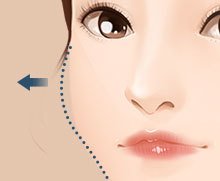
  • Cheekbone Reduction — Face Cheeckbone Reduction
    Case.01

    My cheekbones are
    too protruded
    when viewed from
    45-degree
    side
    angles

  • Cheekbone Reduction — Face Cheeckbone Reduction
    Case.02

    The protruded
    sides of my
    cheekbones
    create shadows
    and
    make the lower
    cheekbone
    look depressed

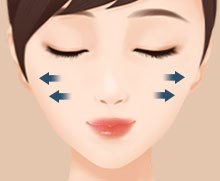
  • Cheekbone Reduction — Face Cheeckbone Reduction
    Case.03

    I don’t like the
    angular features
    on my face,

    especially when
    viewed from the
    front, and I
    want a softer look

  • Cheekbone Reduction — Face Cheeckbone Reduction
    Case.04

    I have flat facial
    features and a
    broad face,

    especially in the
    cheekbone areas

  • Cheekbone Reduction — Face Cheeckbone Reduction
    Case.05

    I have asymmetric
    cheekbones,

    which make
    my face
    look crooked

SURGERY METHOD

  • Cheekbone Reduction — Face Cheeckbone Reduction
    01

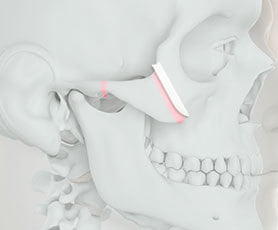
    Necessary amount of
    cheekbone is
    sculpted to complement
    the individual's facial structure

  • Cheekbone Reduction — Face Cheeckbone Reduction
    02

    Removing the broken bone fragments

  • Cheekbone Reduction — Face Cheeckbone Reduction
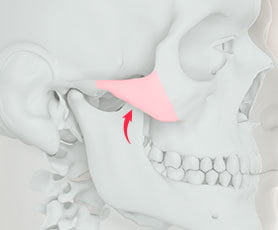
    03

    After rotating the separated cheekbones inward and rearranging them, the tissues are properly positioned to change the movement of the bones to prevent the sagging or depression of the cheeks

  • Cheekbone Reduction — Face Cheeckbone Reduction
    04

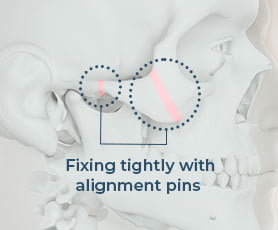
    After confirming if the separated bones are stable and sufficiently joined, the part is firmly positioned with an alignment pin.

ALIGNMENT PIN

  • It is made of the same titanium material as dental implants
    and is harmless to the human body,
    so it does not need to be removed.
  • It is used to fix the relocated bone so that
    it can be attached and joined naturally.
  • It is not magnetic, so it doesn't cause an issue with MRI scans.
Cheekbone Reduction — Sec Method Explain Img

ONLY AT BANOBAGI

Cheekbone Reduction — Face Cheeckbone Reduction
  • Prevention of depression or sagging of cheeks
  • Giving volume and definition to a broad and
    flat facial profile and front cheeks
  • Improving overall facial contour, and not just
    enhancing the concerned part locally
  • Delivering the most satisfying results based on
    safe procedure, precise diagnosis, and expertise

BANOBAGI’S KEY VALUES

Cheekbone Reduction — Sec Value
Cheekbone Reduction — Sec Value Icon
Board certified
plastic surgery specialist
with extensive clinical
experiences and
know-how as an expert
Cheekbone Reduction — Sec Value
Cheekbone Reduction — Sec Value Icon
Customized diagnosis
and expertise built
through years of research
and efforts for individual
foreign customers
Cheekbone Reduction — Sec Value
Cheekbone Reduction — Sec Value Icon
Carefully selected
top-notch medical devices
and pharmaceuticals in use
Cheekbone Reduction — Sec Value
Cheekbone Reduction — Sec Value Icon03
System established to
improve accessibility and
convenience for foreign
customers through
1:1 coordinator assignments,
accommodations,
and transportation
Cheekbone Reduction — Sec Value
Cheekbone Reduction — Sec Value Icon
Team of full-time
anesthesiologists
Cheekbone Reduction — Sec Value
Cheekbone Reduction — Sec Value Icon
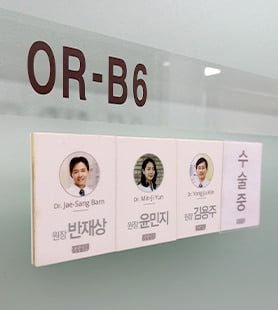
Surgical transparency
using the surgeon’s
real-name system

BEFORE & AFTER

Cheekbone Reduction — Face Cheeckbone Reduction Cheekbone Reduction — Face Cheeckbone Reduction
BEFORE AFTER
Cheekbone Reduction — Face Cheeckbone Reduction Cheekbone Reduction — Face Cheeckbone Reduction
BEFORE AFTER

Frequently Asked
Questions

A wide face can come from the front of the cheekbone, the side arch, the soft tissue on top, or a mix of all three, and each needs a different approach. Your surgeon uses facial photos and a 3-D CT scan to separate bone structure from cheek fat and muscle. We show you the scan during your consultation so you can see the bone structure that is creating the width and understand what the surgery will and will not change.

The goal is a natural reduction that keeps the front cheekbone projecting forward so the face still has dimension, not maximum narrowing that flattens the mid-face. Removing too much bone reduces the structural support for your cheek soft tissue and can make sagging more visible. Your surgeon plans cuts that reduce the side width while preserving the front cheekbone where it gives your face shape and lift.

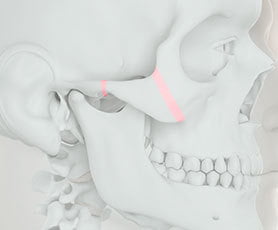
The cheekbone body and arch are cut at planned points, then the bone segment is moved inward or rotated to reduce width, and fixed with small plates and screws so it heals in the new position. The design preserves the orbital rim and the front cheek projection. Your surgeon shows you the planned cut lines on your 3-D scan so you can visualize what is being moved and how it will be secured.

The plates and screws are designed to stay in place permanently and sit flush against the bone so they are not normally felt through the cheek. They can be removed later if they cause irritation or discomfort, though this is not common. We discuss the material, position, and whether removal is likely to be needed, including what the recovery from hardware removal would look like if it ever became necessary.

Stable bone contact and solid fixation with plates and screws are the main tools for preventing the cheekbone from shifting or failing to heal. The cuts are designed so bone meets bone in a way that encourages healing. Your surgeon also limits pressure on the area during recovery with clear instructions about sleeping position, chewing, and activities, because early pressure is one of the biggest threats to stable healing.

Reducing the cheekbone removes some of the bony platform that holds up the cheek soft tissue, which can lead to subtle sagging, especially if the tissue was already beginning to drop. The risk is higher with aggressive reduction. Your surgeon accounts for your soft-tissue quality when deciding how much bone to take and may recommend adding a lifting or volume procedure if the support loss is likely to show.

Major swelling improves over 2 to 3 weeks, but residual cheek numbness, firmness, and limited mouth opening can take several months to fully resolve. You will not be able to chew normally or sleep on your side for a while, and contact sports wait until the bone has united. We give you a phased recovery timeline and see you regularly to confirm the numbness is shrinking and the opening is returning.

Soft foods are the rule for the first weeks, and normal chewing returns only once your surgeon confirms the bone is stable and chewing does not cause pain. Side sleeping and contact sports wait for bony union, which can take several months. We advance your diet and activities based on how your healing looks at each check, not on a fixed calendar date.

Pre-existing asymmetry is measured on your 3-D CT scan before surgery, and your surgeon plans slightly different cuts or rotation on each side to bring the cheekbones closer to balance. The goal is better symmetry, not perfect mirroring, because no face is identical on both sides to begin with. We review your scan and photos together so you see the pre-existing differences and understand which ones are correctable.

The nerve that supplies feeling to the cheek, upper lip, and gum runs close to the cheekbone, so temporary numbness in these areas is expected. Permanent numbness is less common but possible, and the nerve that controls facial movement is in a different zone and is rarely affected. Your surgeon maps the expected sensory territory before surgery and checks how it is recovering at each follow-up visit.

Removing cheekbone width can sometimes leave the face looking flatter or make soft tissue sagging more visible, and fat grafting or a lifting procedure can restore the lost three-dimensional balance. Your surgeon discusses during the consultation whether bone reduction alone will give a harmonious result or whether a complementary soft-tissue step is also warranted. We plan the full picture, not just the bone cut.

Revision depends on what went wrong: if too little bone was removed, a secondary reduction may help. If too much was taken, a bone graft, custom implant, or fat grafting can restore projection, and lifting can address sagging. Over-reduction is harder to fix than under-reduction, which is why we take a conservative approach in the first surgery. A consultation is the best way to weigh what is possible against your current bone and soft tissue.

BANOBAGI PLASTIC SURGERY

BETTER TOGETHER

CONTACT US

517 Nonhyeon-Ro, Gangnam-Gu, Seoul Korea

X

emailicon E-MAIL

english@banobagi.com

Please feel free to contact us,
and we will reply you as soon as possible.
go-top