


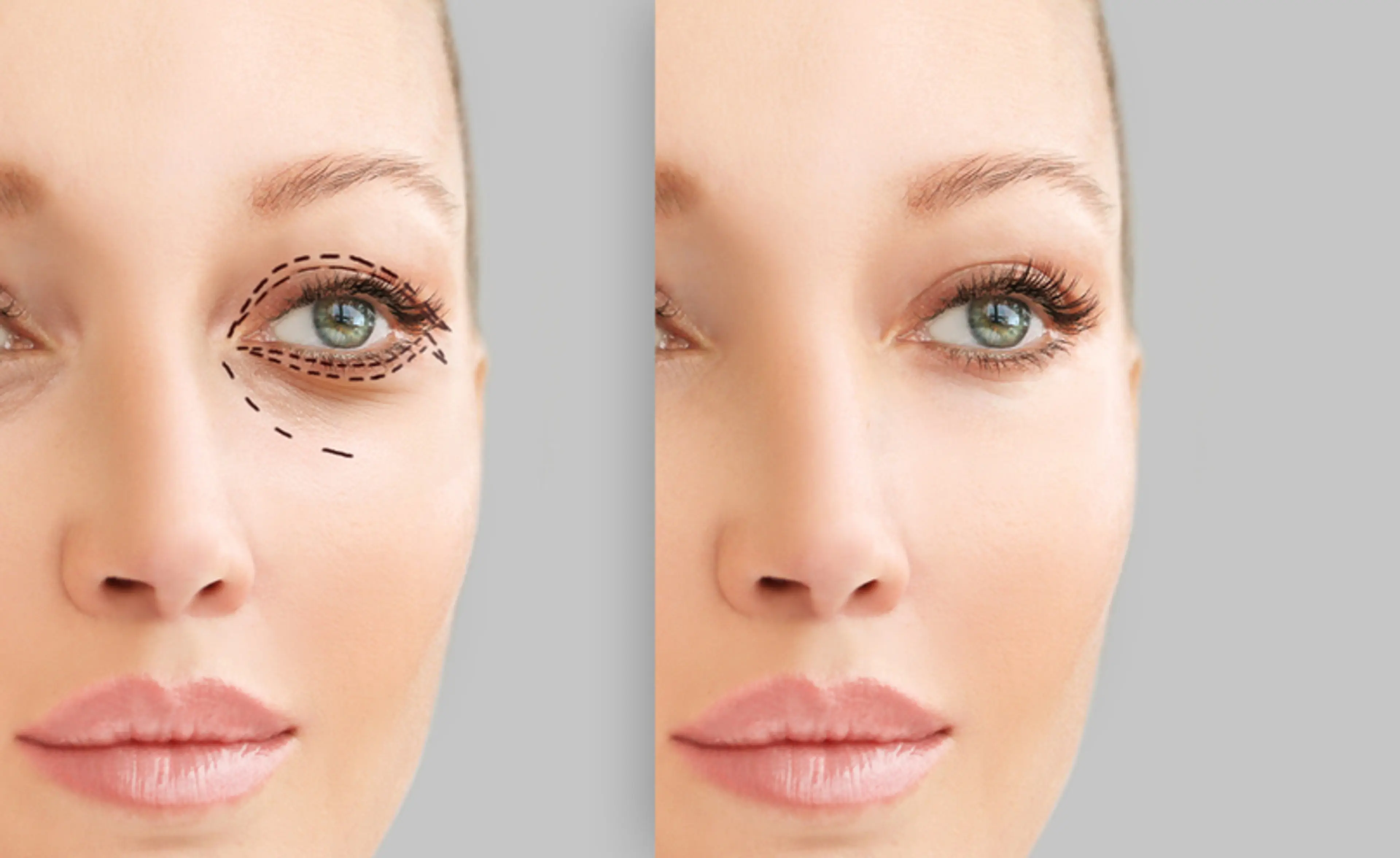
Facial fat grafting is a powerful tool for restoring youthful volume, but when performed incorrectly, it can lead to unnatural results or medical complications. A “botched” procedure not only affects aesthetics but can also cause emotional distress and physical discomfort. At Banobagi Plastic Surgery, we specialize in revision facial surgery, using advanced diagnostic tools and a “Safety-First” philosophy to restore facial harmony and patient confidence.
Recognizing the Signs of a Botched Facial Fat Grafting
Dissatisfaction after fat grafting can range from minor cosmetic irregularities to severe complications that require immediate medical attention. Recognizing these signs early is the first step toward a successful correction.
Common Visual and Physical Indicators:
- Unnatural Facial Contours: The appearance of lumps, bumps, or sharp, “secondary” angles instead of smooth, youthful transitions.
- Asymmetry: Pronounced unevenness where one side of the face does not match the other beyond normal healing variations.
- Overfilled Appearance: A swollen or overly puffy appearance caused by injecting excessive volume, sometimes referred to as “hamster syndrome”.
- Fat Necrosis and Hard Bumps: Formation of firm or hard nodules where the transferred fat has failed to survive and has turned into scar tissue.
- Persistent Numbness or Pain: Long-term tingling or sharp pains that may indicate nerve irritation or damage from improper placement.
- Skin Irregularities: Visible “rippling” or uneven texture on the skin’s surface caused by injecting fat too superficially.
- Oil Cysts: Collections of liquid fat that didn’t integrate, often feeling like soft, movable pockets under the skin.

Root Causes of Fat Grafting Failure
A botched result is rarely due to the patient’s body “rejecting” the fat; rather, it is often the consequence of technical errors during the initial procedure.
- Overcorrection and Poor Estimation: Some surgeons inject excessive amounts of fat to compensate for the portion the body will naturally reabsorb, leading to a permanently “stuffed” look if the survival rate is higher than expected.
- Poor Placement and Bolus Injections: Injecting large “lumps” of fat rather than using a layered micro-droplet technique reduces the chance of survival and increases the risk of lumpiness.
- Improper Fat Purification: Failure to completely separate free oil, blood, and impurities from pure fat cells can cause calcification and lower the final adhesion rate.
- Lack of Anatomical Knowledge: An inability to accurately diagnose individual bone and muscle structures can result in well-balanced lines becoming distorted or heavy.
- Use of Non-Autologous Materials: In some cases, “botched” results occur when synthetic fillers are used in combination with fat grafting inappropriately.
Banobagi’s Advanced Revision Solutions
Correcting a bad fat transfer is significantly more complex than the initial surgery, as it often involves managing scar tissue and altered anatomical layers. Banobagi utilizes a combination of melting, lifting, and re-balancing to fix these issues.
Specialized Revision Techniques:
- Selective Fat Tissue Removal (Accusculpt): A specialized 1444nm laser treatment used to melt and remove excess fat tissues while simultaneously tightening saggy skin to refine facial contours.
- Microliposuction or Surgical Excision: Delicate removal of larger, hardened fat lumps or cysts that cannot be resolved through laser or non-invasive means.
- Strategic SVF Re-Grafting: For areas that have hollowed out unevenly after a botched removal elsewhere, surgeons may use high-purity SVF (Stromal Vascular Fraction) fat grafting to achieve an engraftment rate of 70%–80%, ensuring a smoother, more stable result.
- Elastic Band Lifting: In cases where excess fat weight has caused skin to sag, specialized lifting techniques are used to reposition tissues for a more natural V-shaped chin structure.
- Fat Redistribution: In some instances, fat can be shifted from overfilled areas to neighboring hollows to create a more harmonious transition without needing extensive new harvesting.
Uncompromising Safety and Expertise at Banobagi
Revision surgery is a high-stakes procedure that requires a clinic with a deep-rooted commitment to safety and specialized expertise.
- Surgeon Real-Name System: We guarantee that the board-certified specialist from Seoul National University who conducts your consultation and designs your plan is the same surgeon who performs your procedure.
- Precise Diagnosis Infrastructure: Extensive examinations are performed using high-resolution imaging to identify the exact cause of dissatisfaction—whether it be bone structure, muscle, or soft tissue—to avoid the need for further revision.
- Full-Time Anesthesiology Team: Four anesthesiologists are available on-site to monitor patient conditions in real-time throughout the entire surgical process.
- Emergency Safety Equipment: Our facilities include emergency uninterruptible power supplies (UPS), cardiac defibrillators, and advanced monitoring systems to ensure a secure surgical environment at all times.
- Sterile Processing: Fat harvesting and purification occur in a closed, sterile environment to prevent contamination, which is a major factor in reducing postoperative complications.
The Revision Recovery Journey
Revision recovery typically takes longer than a primary procedure, with final outcomes emerging as tissues stabilize and inflammation subsides.
- Immediate Post-Op (Days 1-3): Patients should expect more swelling than their first surgery. Keeping the head higher than the heart is critical during this period.
- Stitch Removal (Days 7-14): Most stitches are removed between 7 and 14 days after surgery, and patients can often resume daily activities and light social interactions.
- Restrictions (Month 1): Patients must avoid saunas, vigorous exercise, and direct pressure on the face for at least one month to allow the new contours to set.
- Final Results (Months 4-6): While the initial correction is visible early on, the final, harmonious facial lines typically appear after 4 to 6 months once all internal scar tissue has softened.
Comparison: Primary vs. Revision Fat Grafting
| Feature | Primary Fat Grafting | Revision Fat Grafting |
| Complexity | Standard anatomical layers | Altered layers & scar tissue |
| Primary Goal | Adding volume & contour | Correcting irregularities & removal |
| Technique | Harvesting & injection | Laser melting (Accusculpt) & excision |
| Recovery Time | 3 days to 1 week (initial) | 1 to 2 weeks (initial) |
| Surgeon Skill | High skill required | Expert anatomical knowledge required |
Why Banobagi for Revision?
Banobagi Plastic Surgery is a leader in face fat grafting korea because we do not treat revision as a “second try.” We treat it as a specialized corrective science. Our surgeons from Seoul National University utilize their decades of clinical research to fix even the most complex malpositioning and overfilling issues.
Customized Post-Operative Programs:
We offer a specialized aftercare system designed to reduce swelling and promote skin elasticity recovery specifically for revision patients. This includes LED therapy and high-frequency treatments that help soften scar tissue and ensure a smooth final result.
Conclusion
A botched fat grafting procedure can be a heavy burden, but expert correctional options are available at Banobagi Korea. By combining advanced Accusculpt laser technology with world-class surgical expertise, we can resolve asymmetry and over-filling to restore your natural beauty and peace of mind.
Your face is unique, and your revision should be too. Don’t settle for “good enough” when you can achieve the balanced, radiant look you originally deserved.
Begin Your Journey
Connect with our expert surgeons to discuss your goals and discover the ideal approach tailored to you.
Why Choose Banobagi?
Two decades. Thousands of procedures. One standard: if it looks done, it's not done well enough. Every Banobagi surgeon operates within a tight specialisation. Fewer procedure types, more mastery. That's the model, and it works.
We're not the only clinic in Korea. We're the one other clinics measure themselves against.


 E-MAIL
