


















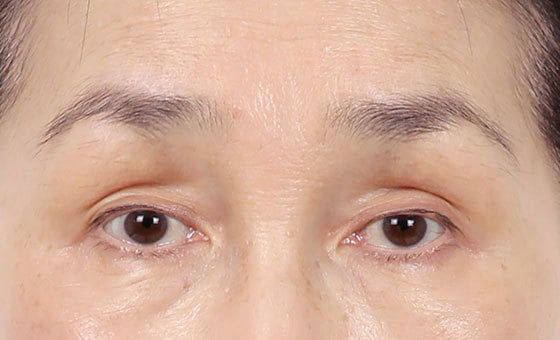



EYE SURGERY FOR THE MIDDLE-AGED

TURN BACK THE CLOCK ON AGING EYES

EYE SURGERY FOR THE MIDDLE-AGED

TURN BACK THE CLOCK ON AGING EYES

BROWPEXY

Browpexy for Aging Eyes

  • Browpexy — OPERATION TIME — About 1 hour.

    OPERATION TIME

    About 1 hour.

  • Browpexy — Anesthesia — Local anesthesia and Sedation

    Anesthesia

    Local anesthesia and Sedation

  • Browpexy — Stitch Removal — After about 6~7 days

    Stitch Removal

    After about 6~7 days

  • Browpexy — Hospitalization — Discharged on the day

    Hospitalization

    Discharged on the day

  • Browpexy — Follow-ups — 1 visit for stitch removal

    Follow-ups

    1 visit for stitch removal

  • Browpexy — Recovery — May resume daily activities in 5~7 days

    Recovery

    May resume daily activities in 5~7 days

BANOBAGI PLASTIC SURGERY

SUITABLE FOR THOSE

  • Case.01

    I tend to alway
    look tired due to
    droopy eyelids

  • Case.02

    My droopy eyelids
    interfere with
    my eyesight

  • Case.03

    I have enough
    space
    between
    the brows and eyes

  • Case.04

    I would like to keep
    the eyelid crease
    the way it is but
    improve the
    droopiness

  • Case.05

    I have experienced
    either eyelid
    inflammation or
    eyelashes poking
    the
    eyes due to droopy eyelids

SURGERY METHOD

  • Browpexy — Before surgery
    01

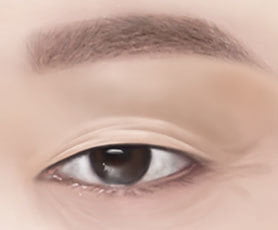
    Before surgery

  • Browpexy — Incisions designed for each individual
    02

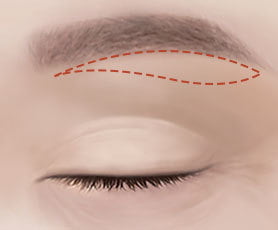
    Incisions designed for each individual

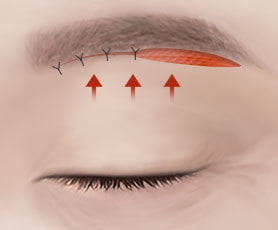
  • Browpexy — Incisions made under the brows
    03

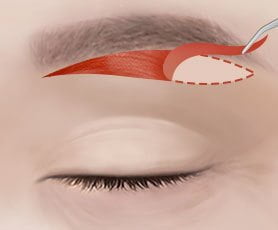
    Incisions made under the brows

  • Browpexy — Excessive skin removed
    04

    Excessive skin removed

  • Browpexy — Underlying soft tissues stabilized to the bone and sutured after pulling the skin
    05

    Underlying soft tissues stabilized to the bone and sutured after pulling the skin

  • Browpexy — After surgery
    06

    After surgery

ONLY AT BANOBAGI

Browpexy — ONLY AT BANOBAGI
  • Younger looking eyes through excessive muscle and
    skin removal
  • Maintain the eyelid crease yet gain a fresher and
    brighter look
  • Incisions made right under the eyebrows for minimal
    scarring
  • No more swollen and inflammation on the eyes due to
    droopy eyelids

BANOBAGI’s Key Values

Browpexy — Relaxing and comfortable facility
Relaxing and
comfortable facility
Browpexy — System established to improve accessibility and convenience for foreign customers through 1:1 coordinator assignments, accommodations, and transportation
System established to
improve accessibility and
convenience for foreign
customers through
1:1 coordinator assignments,
accommodations,
and transportation
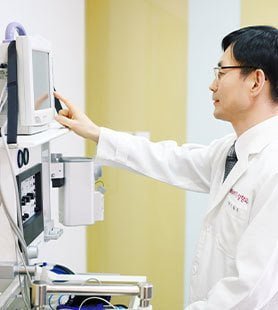
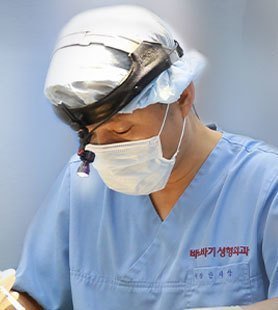
Browpexy — Team of full-time anesthesiologists
Team of full-time
anesthesiologists
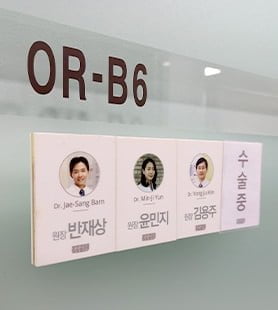
Browpexy — Surgical transparency using the surgeon’s real-name system
Surgical transparency
using the surgeon’s
real-name system
Browpexy — Board certified plastic surgery specialist with extensive clinical experiences and know-how as an expert
Board certified
plastic surgery specialist
with extensive clinical
experiences and
know-how as an expert
Browpexy — Customized diagnosis and expertise built through years of research and efforts for individual foreign customers
Customized diagnosis
and expertise built
through years of research
and efforts for individual
foreign customers

BEFORE & AFTER

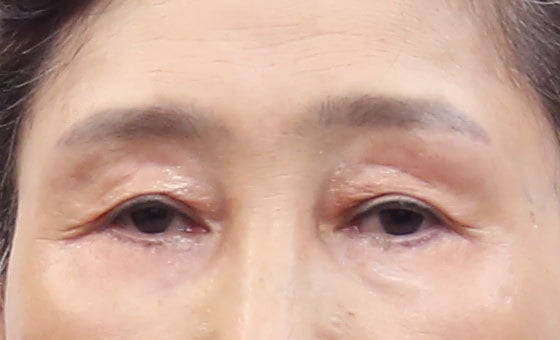
Browpexy — Before treatment Browpexy — After treatment
BEFORE AFTER
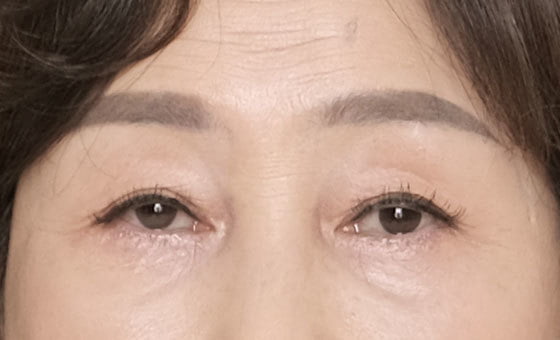
Browpexy — Before treatment Browpexy — After treatment
BEFORE AFTER

Frequently Asked
Questions

Think of browpexy as a stabilizer with a modest height change, not a full forehead raise. When the outer brow is soft or beginning to drop, internal support stitches holds that segment so upper-eyelid skin removal does not unmask or worsen brow descent; some patients see a mild, fresher resting height, most often toward the outer side, but the shift is still smaller than after a temporal or endoscopic forehead lift. If the goal is durable support so outer hooding does not rush back after blepharoplasty, browpexy fits the job.

It depends on how far the brow has dropped and which third of the brow is heavy, not on preference for a smaller scar alone. Mild to moderate, mainly outer descent next to planned upper blepharoplasty is where browpexy often earns its place. A temporal lift is more predictable when the outer brow sits clearly low and needs a stronger outer direction of lift. Whole-brow ptosis, a heavy forehead, or meaningful central and inner drop usually points toward a broader forehead or endoscopic approach.

Yes. Outer focus is one of the reasons middle-aged browpexy is paired with upper-lid work so often. Outer-brow descent pushes skin over the outer upper lid; internal support stitches aimed at that outer third supports the tail without jacking the inner brow high. Holding the inner brow back from over-lift helps avoid a peaked or surprised center. Pure outer support will not fix heavy central forehead descent, deep glabellar bulk, or marked whole-brow ptosis. Those patterns need temporal or forehead work instead of, or along with, limited internal support stitches.

In many midlife plans the same upper-eyelid crease cut used for blepharoplasty carries the brow support, so a separate scalp or brow-edge incision is often unnecessary. Exact access still depends on anatomy and the rest of the plan, not a single diagram. Sutures usually secure brow soft tissue toward lining over the bone at a planned height. Permanent implanted plates or screws are not the usual browpexy pattern; temporary firmness or a small knot that can be felt under the outer brow or temple for weeks is.

Height and direction of lift are chosen on purpose so the outer brow is supported while the peak stays a gentle curve, not a high tent. Over-fixing one high point, or lifting the inner brow as hard as the outer, is what stages a surprised look. Soft-tissue thickness, the patient’s existing arch, and how the face moves at rest and in expression guide where anchors go.

Local pressure and point tenderness around the internal support stitches are expected early, not a surprise. Band-like temple or outer-brow tightness, a dull headache, and tenderness to touch commonly last several days to about one or two weeks. Mild ache with expression can hang on longer while soft tissue adapts to the new support. When browpexy rides with upper blepharoplasty, social bruising and lid swelling often settle over about seven to fourteen days; deeper tenderness softens over several more weeks.

Side-to-side difference in the first weeks is common: swelling, temporary muscle imbalance, and firm early internal support stitches can make one brow look higher, tighter, or more peaked even when both sides were set carefully. The uneven look is often most obvious in week one and two. Over about four to eight weeks height usually softens and reads more natural. Many patients are close to planned resting position by two to three months, with subtle settling possible into the three-to-six-month window.

Only when elevation outruns the lid–brow relationship that belongs on that face. Raising the outer brow uncovers more upper-lid skin and can increase lower part of the upper eyelid show. Kept modest, that opens a heavy lid in a way that still looks like the patient. Overdone, the brow-to-lash distance lengthens, the eye can look rounder or permanently “alert,” and the resting face drifts away from the familiar expression. Planning leans on resting height, animation habits, and how much hooding clears with gentle manual support, not only how open the eye can be made on the table.

Once the outer brow is stabilized or modestly lifted, some of the upper-lid redundancy is already taken up by that new position, so the safe skin budget shrinks. If eyelid skin is then excised as if the brow never moved, removing too much tissue can hollow the crease, strain closure, worsen dryness, or leave too much lower part of the upper eyelid show. Brow contribution versus true eyelid excess is sorted first; internal support stitches is planned when outer descent is part of the heaviness; only then is remaining lid skin measured with the brow supported.

Some gradual relaxation is possible. The procedure improves support; it does not stop the forehead from aging. Sutures and healing create a new resting hold that, in good candidates, usually stays better than the pre-surgery baseline for years, while skin looseness, fat and ligament change, forehead muscle pull, and gravity keep working. Early significant drop can mean internal support stitches failure, insufficient release or support, heavy tissues, or fast progressive aging, not one universal cause.

When internal support stitches travels through the upper-eyelid crease incision already planned for blepharoplasty, there is usually no extra scar on the forehead, scalp, or above the brow hairs. The skin scar patients see is the crease line itself, which typically settles into the natural fold over months. A different access, for example a limited approach near the brow edge for specific anatomy, can leave a separate fine scar, and that possibility is disclosed before consent rather than assumed away.

A brow stuck too high may need release of over-tight internal support stitches and controlled lowering of that segment. Under-correction may need re-support, or a more powerful lift if the original descent was always beyond what modest internal support stitches could hold. True side mismatch is fixed at the failed detail: height of the anchor, direction of lift, or early scar tightness, once remaining swelling is no longer the main actor. Functional trouble (incomplete eye closure, severe early imbalance, exposure) jumps the queue for earlier intervention.

BANOBAGI PLASTIC SURGERY

BETTER TOGETHER

CONTACT US

517 Nonhyeon-Ro, Gangnam-Gu, Seoul Korea

X

emailicon E-MAIL

english@banobagi.com

Please feel free to contact us,
and we will reply you as soon as possible.
go-top