


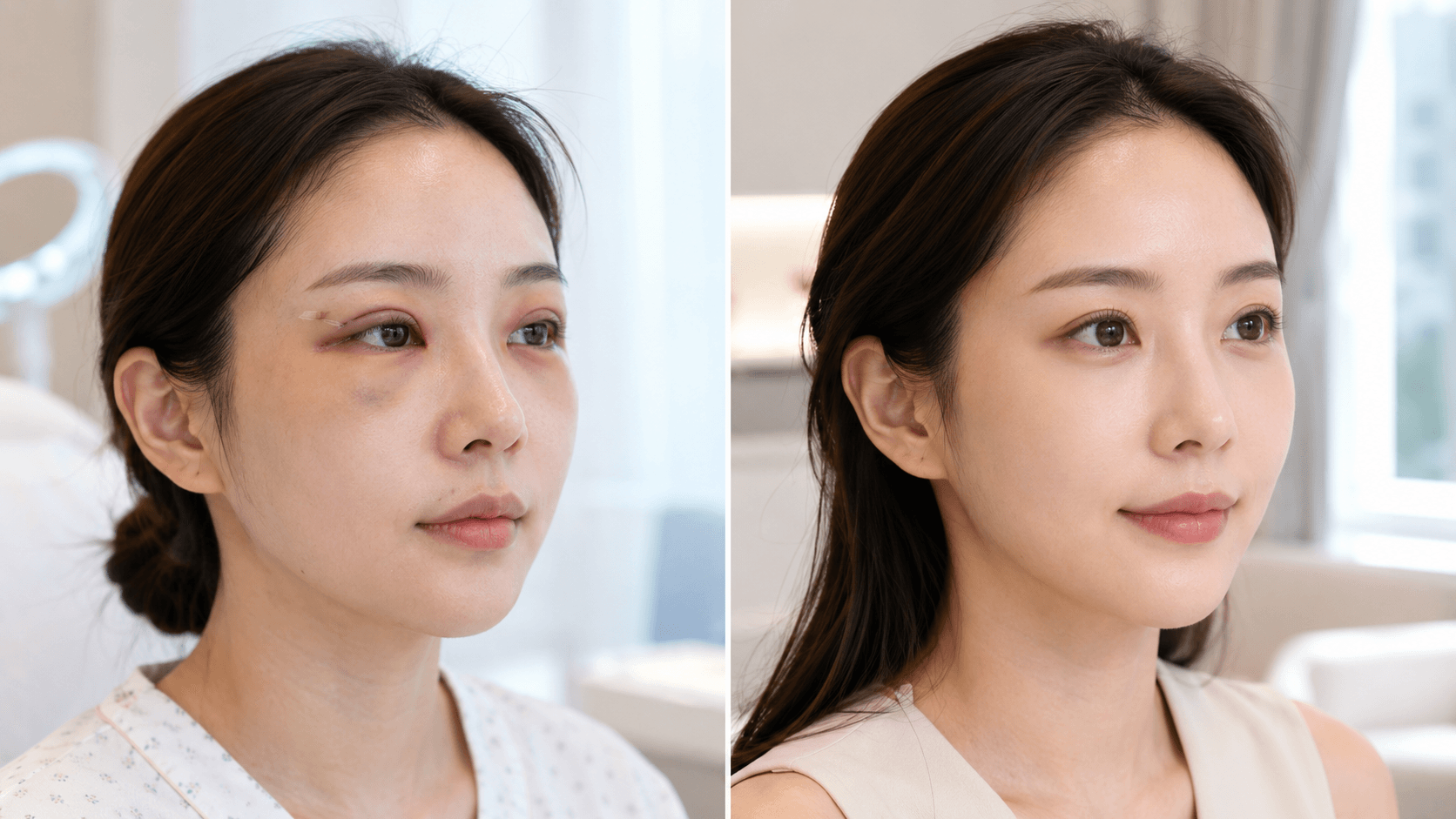
The journey of korea eyelid surgery is one of the most sought-after and transformative experiences in modern aesthetic medicine. Whether you are addressing functional concerns like drooping skin that obscures your vision or seeking aesthetic refinement for more radiant, open eyes, understanding the “before and after” transition is essential for a smooth and stress-free recovery. Blepharoplasty, or double eyelid surgery, involves intricate, high-precision adjustments to the eyelid’s skin, muscle, and fat distribution.
Blepharoplasty results continue to change long after the operation itself. Swelling, bruising, scar maturation, and crease definition each follow a different timeline, making realistic expectations and consistent aftercare essential. This guide maps those stages so patients can recognize normal progress and know when to contact the clinic.
Pre-Surgery: The Foundation of Your Transformation
The “before” phase of blepharoplasty before and after begins long before the first incision is made. At Banobagi, success is rooted in a meticulous consultation and diagnostic process.
- Anatomical Analysis: Our specialists evaluate skin thickness, the degree of fat accumulation, and the strength of the levator muscle (the muscle responsible for lifting the eyelid).
- Method Selection: Depending on your anatomy, we choose between the Non-Incision (Burying), Partial Incision, or Full Incision methods to ensure the most natural-looking results.
- Medical Screening: Every patient undergoes a health screening to ensure they are fit for anesthesia and the surgical procedure, prioritizing safety at every step.
The Immediate Post-Operative Phase (Days 1–3)
The first 72 hours following your korea eyelid surgery are the most critical for managing inflammatory responses and protecting the delicate surgical site.
- The Peak of Inflammation: Swelling after surgery and mild bruising typically reach their maximum intensity during this period.
- Intensive Cold Therapy: Applying medical-grade cold compresses in 20-minute intervals is vital to constrict blood vessels and limit the accumulation of fluid in the eyelids.
- Sensory Changes: It is normal for the eyes to feel tight, watery, or slightly sensitive to bright light. Some patients may experience temporary “blurred vision” due to the use of antibiotic ointments applied to the incision lines.
- Strategic Elevation: To prevent fluid from pooling in the face, patients are advised to sleep with their head elevated at a 30-to-45-degree angle using firm pillows.
Early Recovery and Professional Care (Days 4–7)
During the second half of the first week, the “surgical appearance” begins to soften, and daily comfort improves as the initial trauma resolves.
- Professional Stitch Removal: For patients who underwent the incision-based method, sutures are typically removed on Day 7 by a Banobagi specialist.
- Transition to Warm Therapy: After the initial 72 hours of cold therapy, patients often transition to warm compresses. This helps improve blood circulation, which accelerates the body’s ability to reabsorb and dissipate any remaining bruising.
- Resuming Light Daily Routine: While strenuous activity is still prohibited, most patients feel comfortable returning to non-strenuous tasks. However, the use of eye makeup or contact lenses should be avoided until specifically cleared by the medical team.

The “Settling” Period (Weeks 2–4)
Between the second and fourth weeks, the most dramatic visible changes in the blepharoplasty before and after journey occur as the eyes begin to “reveal” their new shape.
- Significant Edema Resolution: Approximately 70–80% of major post-operative swelling subsides during this window. The eyelid crease, which may have initially appeared too high or “thick,” starts to settle into its intended position.
- Returning to Aesthetic Norms: Most patients feel confident enough to resume wearing eye makeup and contact lenses at this stage.
- Incremental Activity: Light cardio, such as brisk walking, can be resumed. High-impact sports or heavy lifting should still be avoided to prevent sudden spikes in blood pressure that could affect the healing tissues.
Long-Term Maturation and Refinement (Months 2–6)
The final refinement of your results takes place over several months as the internal tissues fully heal and the scar tissue matures.
- Tissue Softening: Any initial stiffness or the “sausage-eye” appearance fades completely as the internal tissues soften and become more pliable.
- The Final Crease: The eyelid crease settles into its permanent, natural-looking position, harmonizing perfectly with the eye’s movement.
- Scar Maturation: Incision lines, which may have been pink or slightly raised, continue to fade into a pale, nearly invisible line that is hidden within the natural fold of the eyelid.
- Patient Satisfaction: By the end of the sixth month, the “after” result is fully established, providing a more awake, youthful, and vibrant appearance.
Why Choose Banobagi for Korea Eyelid Surgery?
Banobagi Plastic Surgery Clinic is a global destination for eyelid surgery due to our uncompromising commitment to anatomical precision and patient safety.
- Surgeon Real-Name System: We guarantee that the specialist you consult with is the exact expert who performs your procedure, ensuring that the original design plan is executed perfectly.
- Expert Anesthesiology: Our board-certified, full-time anesthesiologists monitor every procedure in real-time, ensuring a painless and safe experience even for “minor” procedures.
- 1:1 Customized Aftercare: Because every patient heals differently, we provide tailored recovery programs that include specialized treatments to manage swelling and accelerate the recovery of sensitive eyelid tissues.

Conclusion
The healing process following blepharoplasty is a journey of biological patience and professional care. By following our expert guidance and understanding the distinct stages of blepharoplasty before and after, you can navigate your recovery with peace of mind. At Banobagi, our goal is to help you achieve eyes that do not just look “operated on,” but look naturally radiant, confident, and healthy.
Begin Your Journey
Connect with our expert surgeons to discuss your goals and discover the ideal approach tailored to you.
Why Choose Banobagi?
Two decades. Thousands of procedures. One standard: if it looks done, it's not done well enough. Every Banobagi surgeon operates within a tight specialisation. Fewer procedure types, more mastery. That's the model, and it works.
We're not the only clinic in Korea. We're the one other clinics measure themselves against.


 E-MAIL
