


Chronic jaw pain, clicking sounds, and a restricted range of motion are more than just daily annoyances; they are symptoms of Temporomandibular Joint (TMJ) disorders. The jaw joint acts as a complex sliding hinge connecting your jawbone to your skull. When this system, comprising bone, cartilage, and ligaments, becomes misaligned or damaged, it can lead to debilitating pain that affects speaking, eating, and sleep quality. While non-surgical options like splints or physical therapy provide relief for many, severe structural discrepancies often require specialized surgical intervention.
Persistent TMJ pain often points to more than inflammation alone. Bite alignment, joint position, and skeletal structure must be evaluated together to determine whether surgery can provide lasting relief. Banobagi’s maxillofacial team uses that relationship to plan treatment aimed at restoring comfortable movement and stable function.
Understanding TMJ Disorders and Their Root Causes
TMJ disorders (TMD) arise when the temporomandibular joint falls out of balance due to internal structural issues. For many patients, the source of pain is not just the joint itself but a misaligned foundation.
Common Causes for Specialist Intervention
- Skeletal Misalignment: Conditions like a severe underbite, overbite, or facial asymmetry place uneven pressure on the joints, causing them to wear down prematurely.
- Joint Disc Displacement: The shock-absorbing disc that cushions the joint can slip or become “stuck,” resulting in painful clicking or “locking” of the jaw.
- Degenerative Bone Changes: Severe TMD can lead to the resorption (shrinking) of the mandibular condyle, the rounded end of the jawbone that sits in the joint socket.
- Ankylosis and Trauma: Past injuries can cause the jaw joint to fuse with the skull bone (ankylosis), leading to a total loss of mouth-opening ability.
Surgical Pathways for TMJ Relief at Banobagi
Banobagi offers a tiered approach to treatment, ensuring that patients receive the most effective intervention for their specific degree of joint damage.
1. Minimally Invasive Arthroscopy and Arthrocentesis
For patients with moderate joint issues, we utilize minimally invasive techniques to “clean” the joint space.
- Arthrocentesis: A process of flushing the joint with sterile fluid to remove inflammatory byproducts.
- Arthroscopy: Using a miniature camera and surgical devices through tiny incisions to repair the internal disc or remove scar tissue. This approach offers a quick recovery with no visible external scarring.
2. Functional Double Jaw Surgery (Orthognathic Surgery)
When the root cause of TMJ pain is a skeletal discrepancy, double jaw surgery in Korea is often the definitive solution. This complex procedure realigns the upper jaw (maxilla) and lower jaw (mandible) into their ideal anatomical positions.
- Bimaxillary Osteotomy: By repositioning both jaws, we eliminate the uneven bite (malocclusion) that forces the joints into a strained position.
- Pressure Relief: Specific techniques, such as the Sagittal Split Ramus Osteotomy (SSRO), allow the surgeon to precisely adjust the jaw bones to relieve chronic tension on the joint surfaces.

3. Open Joint Reconstruction and Arthroplasty
In cases of severe dysfunction or joint fusion, open-joint surgery may be required. This allows the surgeon direct access to remove damaged bone, replace a diseased disc, or reconstruct the entire joint with biocompatible materials.
The Banobagi Advantage: Precision, Safety, and Innovation
Choosing Banobagi means choosing a center where functional health and aesthetic harmony are prioritized equally.
1. Advanced 3D-CT Diagnostic Planning
Safety begins with accurate imaging. We use high-resolution 3D-CT scans to visualize your internal bone structure and nerve pathways in three dimensions. This allows our specialists to predict surgical errors and plan every movement with millimeter precision.
2. Bioresorbable “Osteotrans” Pins
At Banobagi, we often use bioresorbable pins that are gradually absorbed by your bone over time. This eliminates the need for a second surgery to remove metal hardware, reducing both long-term pain and additional surgical costs.
3. Collaborative Specialist Teams
Our surgical plans are developed through cooperation between plastic surgery specialists and oral and maxillofacial surgeons. This ensures that your bite, joint health, and facial profile are addressed comprehensively in one operation.
4. Specialized Anesthesia and Recovery Care
Every procedure is monitored by board-certified, full-time anesthesiologists. Following double jaw surgery in Korea, patients typically stay in the hospital for 3 nights for professional monitoring and pain management.
The Recovery Journey: What to Expect
Recovery from TMJ or jaw surgery is a gradual process that requires patience and strict adherence to post-operative guidelines.
- The First Week: Significant swelling after surgery is normal. You will follow a strict liquid or pureed diet to minimize strain on the healing jaw bones and joints.
- Physical Therapy: Gentle jaw exercises are critical. You will be instructed on “mouth-opening” exercises to prevent joint stiffness and ensure a full range of motion.
- The 6-Week Milestone: By the end of week six, most visible swelling has subsided. You can gradually transition to soft foods as cleared by your surgeon.
- Long-Term Results: Full bone healing and functional stabilization typically take 3 to 6 months. Many patients report a complete resolution of chronic migraines and joint pain during this phase.
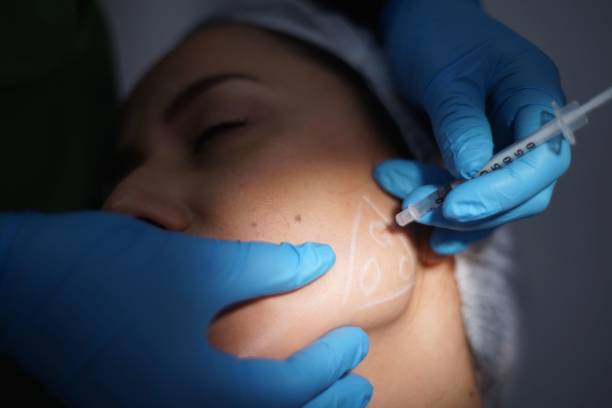
Is Specialist TMJ Surgery Right for You?
You may be an ideal candidate for surgical intervention if:
- Your jaw pain does not improve with splints, Botox, or physical therapy.
- You experience persistent “locking” of the jaw or restricted mouth opening.
- Structural damage (such as bone-on-bone friction) is visible on 3D CT scans.
- Your TMJ pain is clearly linked to a severe skeletal underbite, overbite, or facial asymmetry.
Conclusion
Living with chronic jaw pain is an unnecessary burden that impacts every aspect of your life, affecting everything from nutrition to self-confidence. At Banobagi Plastic Surgery Clinic, we use the world-class expertise of double jaw surgery in Korea to reconstruct the structural foundation of your face and joint health.
Restore your function, eliminate your pain, and rediscover the joy of a healthy, balanced smile.
Begin Your Journey
Connect with our expert surgeons to discuss your goals and discover the ideal approach tailored to you.
Why Choose Banobagi?
Two decades. Thousands of procedures. One standard: if it looks done, it's not done well enough. Every Banobagi surgeon operates within a tight specialisation. Fewer procedure types, more mastery. That's the model, and it works.
We're not the only clinic in Korea. We're the one other clinics measure themselves against.


 E-MAIL
