










Reduction Rhinoplasty Deviation — Nose Reduction Rhinoplasty

REDUCTION RHINOPLASTY

HUMP NOSE CORRECTION, WIDE NASAL BONE REDUCTION, DEVIATED NOSE SURGERY

Reduction Rhinoplasty Deviation — Nose Reduction Rhinoplasty

REDUCTION RHINOPLASTY

HUMP NOSE CORRECTION, WIDE NASAL BONE REDUCTION, DEVIATED NOSE SURGERY

Reduction Rhinoplasty Deviation — Nose Reduction Rhinoplasty
Nose Reduction Rhinoplasty Deviation

DEVIATED NOSE
CORRECTION

  • Reduction Rhinoplasty Deviation — Sec Info Icon

    OPERATION TIME

    About 1 hr. 30 mins.

  • Reduction Rhinoplasty Deviation — Sec Info Icon

    ANESTHESIA

    Sedation

  • Reduction Rhinoplasty Deviation — Sec Info Icon

    STITCH REMOVAL

    After about 10 days

  • Reduction Rhinoplasty Deviation — Sec Info Icon

    HOSPITALIZATION

    Discharged on the day

  • Reduction Rhinoplasty Deviation — Sec Info Icon

    FOLLOW-UPS

    2 visits for stitch removal

  • Reduction Rhinoplasty Deviation — Sec Info Icon

    Recovery

    May resume daily activities in 7-10 days

SUITABLE FOR THOSE

BANOBAGI PLASTIC SURGERY

  • Case.01

    I have a
    crooked nose

  • Case.02

    My nose got deviated
    by an accident or
    external force

  • Case.03

    I have a deviated
    nose, which causes
    functional problems

  • Case.04

    I have a deviated
    nose, so it isn’t
    balanced with my
    facial features

  • Case.05

    I want to make my
    nose look straighter
    and aesthetically
    more beautiful

SURGERY METHOD

  • Nose Reduction Rhinoplasty Deviation
    01

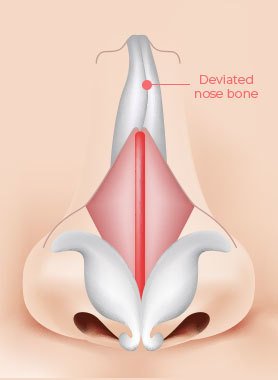
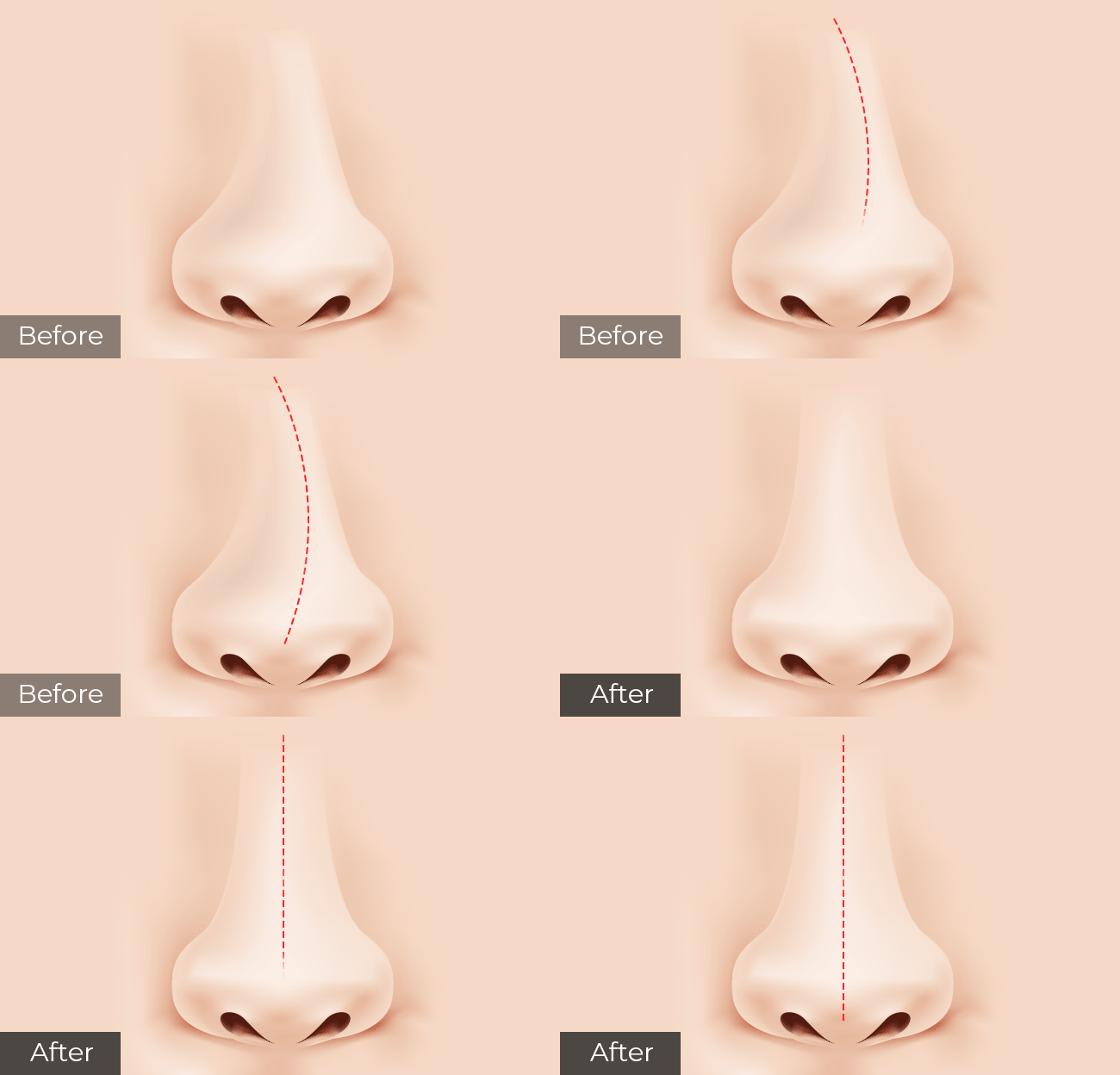
    Deviated nose before operation

  • Nose Reduction Rhinoplasty Deviation
    02

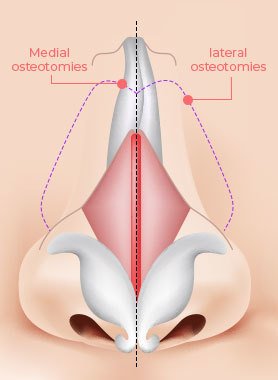
    Separation of nasal bones through medial and lateral osteotomies

  • Nose Reduction Rhinoplasty Deviation
    03

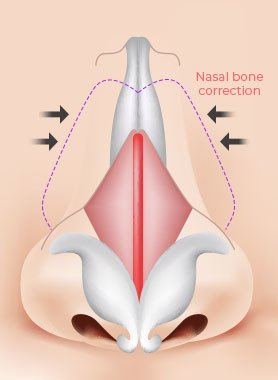
    Correction of the nasal shape by relocating the separated nasal bones

  • Nose Reduction Rhinoplasty Deviation
    04

    Straightened nasal bone after surgery

Reduction Rhinoplasty Deviation — Sec Method Explain

To improve the shape of the deviated nasal bone and functional issues
+ Deviated nasal septum
+ Nose tip correction

Functional and Aesthetic Rhinoplasty

ONLY AT BANOBAGI

Nose Reduction Rhinoplasty Deviation
  • Straightened nose bridge
  • Improving the balance of facial features by correcting
    the shape of the crooked nose
  • Precise correction and relapse prevention through
    operation by experienced specialists
  • Improving functional issues of the crooked nose with
    customized surgery according to the degree and
    severity of deviation

BANOBAGI’S KEY VALUES

Reduction Rhinoplasty Deviation — Sec Value
Reduction Rhinoplasty Deviation — Sec Value Icon
Board certified
plastic surgery specialist
with extensive clinical
experiences and
know-how as an expert
Reduction Rhinoplasty Deviation — Sec Value
Reduction Rhinoplasty Deviation — Sec Value Icon
Customized diagnosis
and expertise built
through years of research
and efforts for individual
foreign customers
Reduction Rhinoplasty Deviation — Sec Value
Reduction Rhinoplasty Deviation — Sec Value Icon
Carefully selected
top-notch medical devices
and pharmaceuticals in use
Reduction Rhinoplasty Deviation — Sec Value
Reduction Rhinoplasty Deviation — Sec Value Icon03
System established to
improve accessibility and
convenience for foreign
customers through
1:1 coordinator assignments,
accommodations,
and transportation
Reduction Rhinoplasty Deviation — Sec Value
Reduction Rhinoplasty Deviation — Sec Value Icon
Team of full-time
anesthesiologists
Reduction Rhinoplasty Deviation — Sec Value
Reduction Rhinoplasty Deviation — Sec Value Icon
Surgical transparency
using the surgeon’s
real-name system

BEFORE & AFTER

Nose Reduction Rhinoplasty Deviation Nose Reduction Rhinoplasty Deviation
BEFORE AFTER
Nose Reduction Rhinoplasty Deviation Nose Reduction Rhinoplasty Deviation
BEFORE AFTER

Frequently Asked
Questions

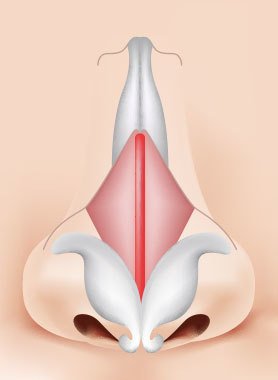
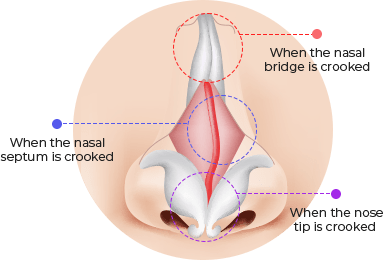
Crookedness can come from the nasal bones in the upper third, septal cartilage in the middle third, tip cartilages in the lower third, or facial asymmetry itself. Often several combine. Front and base photographs with examination, and sometimes imaging, map which layers deviate. Each layer needs its own correction. Straightening one alone usually leaves visible deviation.

Usually yes. A crooked external nose often shares its cause with septal deviation or valve narrowing, so framework correction commonly improves airflow. Where obstruction exists, septal straightening and valve support are built into the same plan. Cosmetic straightening should never come at the airway's expense.

Typical components include osteotomies, which are controlled bone cuts that reposition the nasal bones. Other steps may include septal straightening or reconstruction, scoring or suturing to relax curved cartilage, and grafts that hold the new alignment. Not every nose needs all four. The plan follows which thirds of your nose deviate and in which direction.

Every face has some asymmetry, so a geometrically straight nose can still look off if the structures around it are not centered. Planning uses true facial midline references and photo analysis, and includes a frank discussion of what "straight" means on your face. The goal is a nose that reads straight in everyday view, which sometimes means small deliberate compromises.

Realistically, expect major improvement rather than perfection. Cartilage and bone carry healing forces that resist perfect geometry, and underlying facial asymmetry does not change. Most patients reach a nose that looks straight in social view, with minor residual deviation visible only on close inspection. That expectation belongs in the consent discussion.

Spreader grafts stabilize the midline and open the internal valve, and they can add slight middle-vault width in narrow or thin-skinned noses. Because they can be placed asymmetrically, thicker on the collapsed side, they are also one of the main tools for holding a straightened septum. Graft size is planned against your starting width.

Swelling is never symmetric, so the nose can look off-center in the first weeks even after precise correction. Sidewall firmness and bruising distort the read for 4-8 weeks. Direction of the correction is usually judgable around 6-8 weeks, with refinement continuing for months.

Cartilage tends to return toward its original shape (cartilage memory), and scar contraction adds pull through the first year. Scoring, suture fixation, and support grafts counteract this, but mild partial recurrence is a known risk even with good technique. Progressive or significant return after healing is assessable for targeted revision.

After osteotomies the bones are mobile until they knit, which takes roughly 4-6 weeks. An external splint plus taping protects the position for the first 1-2 weeks. During the protection window, avoid glasses resting on the bridge, pressure while sleeping, and any facial-impact activity.

Typical timelines start with desk work after splint removal at week 1-2. Light exercise is usually around week 3-4. Glasses and careful side sleeping often wait until week 4-6, once bones knit. Contact sports or facial-impact risk wait until after 6-8 weeks with protection. Your schedule shifts with the extent of bone work. Most patients plan about 10 days in Seoul for the early checks.

Changing airflow distribution can make the previously "good" side feel different, usually because you finally have a comparison rather than because anything worsened. Genuine new obstruction after planned correction is uncommon, but persistent congestion beyond the first couple of months is checked with examination and a scope.

Wait until tissues stabilize, usually 9-12 months, because early asymmetry is often swelling and scar rather than true recurrence. Documented progressive change is worth photographing monthly so the pattern is clear at review. When revision is appropriate, it targets only the layer that moved.

BANOBAGI PLASTIC SURGERY

BETTER TOGETHER

CONTACT US

517 Nonhyeon-Ro, Gangnam-Gu, Seoul Korea

X

emailicon E-MAIL

english@banobagi.com

Please feel free to contact us,
and we will reply you as soon as possible.
go-top